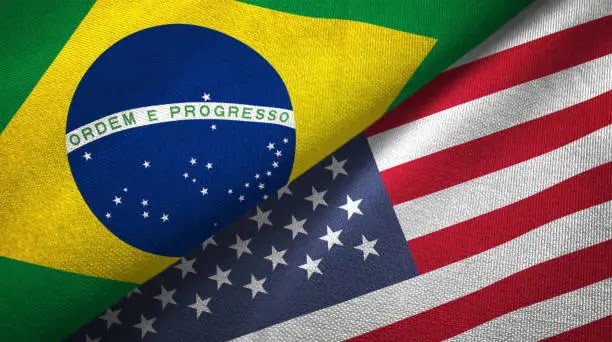
The United States government has proposed a 25% tariff on imports from Brazil, following the conclusion of a Section 301 investigation into Brazil's trade practices. The proposal was put forward by US Trade Representative Jamieson Greer, with a list of exempted items also included, though the full scope of those exemptions has not yet been made public. Section 301 is a provision of US trade law that allows the government to impose tariffs or other trade restrictions on countries it determines are engaging in unfair, unreasonable, or discriminatory trade practices.
The timing is significant. Brazil is in the midst of one of its strongest agricultural export periods in recent memory, with corn shipments up more than 500% year-on-year in early June data, and its national agriculture agency having confirmed a record-breaking grains harvest for 2025/26. A 25% tariff, if fully implemented, would raise the cost of Brazilian goods entering the US market and could disrupt trade relationships that both countries' agricultural sectors have come to rely on.
The broader implications extend beyond the US-Brazil relationship. Brazil has become a critical supplier for food-importing nations across Africa, the Middle East, and Southeast Asia — regions that depend on competitively priced South American grain to meet domestic food needs. Any disruption to Brazilian export flows, whether through retaliatory measures or a cooling of trade confidence, could ripple through global commodity markets at a moment when supply chains are already under pressure from multiple directions.
For global agricultural markets, the proposed tariff introduces a new layer of uncertainty at a particularly sensitive time. Buyers and producers worldwide will be watching closely to see whether the exemptions list softens the real-world impact, whether Brazil responds with retaliatory measures of its own, and whether the two countries move toward negotiation or a prolonged trade dispute.