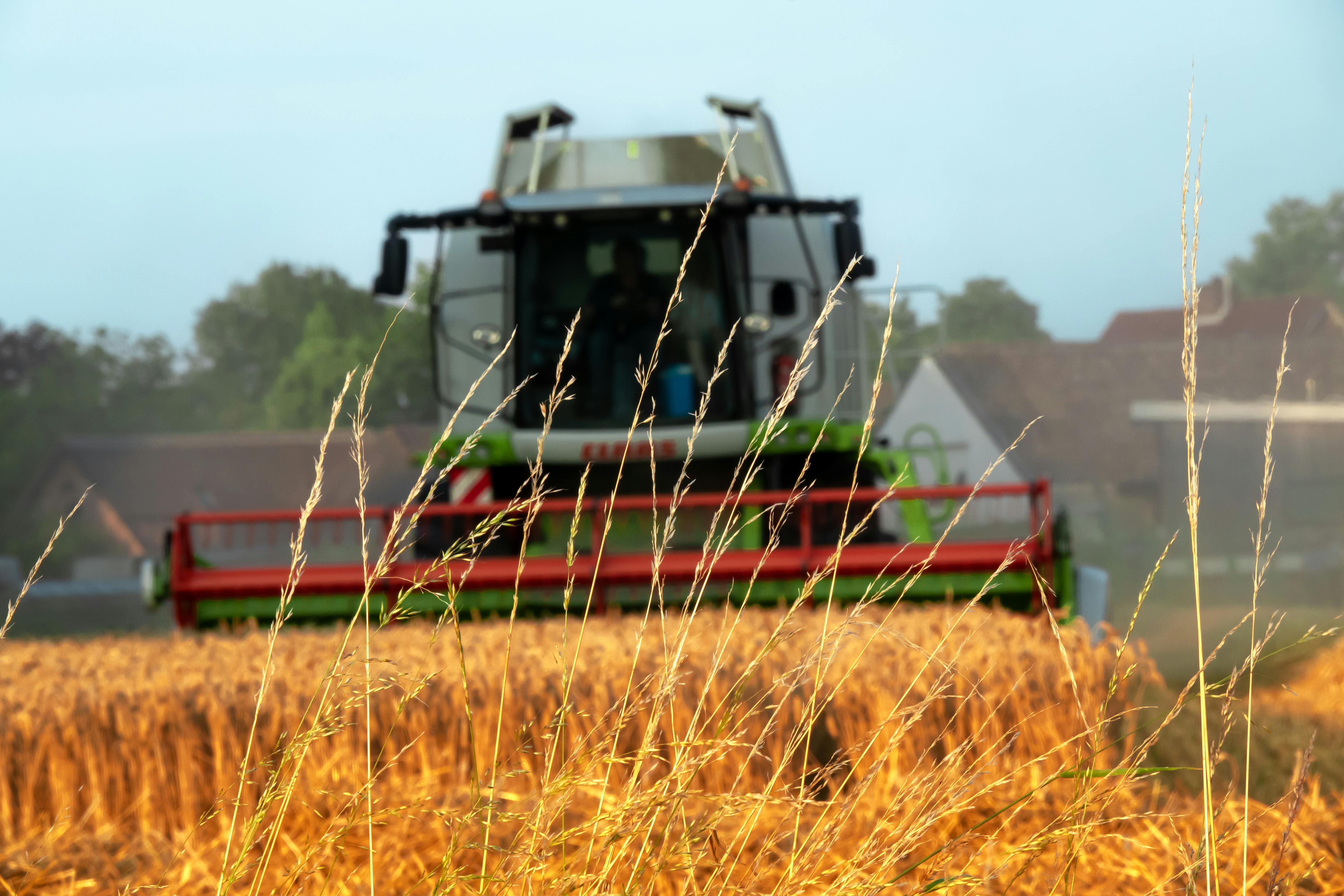
European crops such as maize, rapeseed and winter wheat are now reaching maturity and being harvested significantly earlier than they did two decades ago. European Commission data shows some winter wheat varieties are maturing up to 20 days earlier than in 2000.
The shift is being driven by rising temperatures, but earlier harvests are increasingly coming with lower yields and poorer crop quality because of heat and drought. France, for example, is expecting maize production to fall sharply this year.
A Continent-Wide Phenomenon
The trend is not limited to a single crop or region. Across Europe, farmers are reporting that their crops are running ahead of schedule. In parts of France, rapeseed flowering began up to 20 days earlier than in previous decades. In Germany, winter wheat ripening has advanced by 10 to 15 days on average. The Netherlands and Belgium have also reported significant shifts in crop phenology.
The changes are driven by rising temperatures. The EU's Copernicus Climate Change Service recorded the continent's second-warmest winter on record in 2025-2026, with temperatures 1.5°C above the long-term average. Warmer spring temperatures have accelerated plant development across the continent.
The Yield Penalty
Earlier harvests are not necessarily a sign of improved agricultural productivity. In many cases, they reflect heat stress and drought, which shorten the growing cycle and reduce the time available for crops to accumulate biomass and fill grains.
France, the European Union's largest grain producer, is bracing for a steep drop in maize production this year. The national agricultural statistics service is expected to confirm a decline of at least 15% when official estimates are released. In Spain, olive oil production has already been hit hard by drought and earlier flowering, with yields expected to fall by more than 20% compared to the five-year average.
The combination of earlier maturity and lower yields is a double blow for farmers, who are facing both reduced output and increased costs.
A Structural Shift
The trend reflects a broader structural shift in European agriculture. According to a recent study published in the journal Nature, almost 80% of European agricultural land has experienced earlier crop emergence over the past 40 years.
As temperatures continue to rise, earlier harvests are likely to become the new normal. This poses significant challenges for the resilience of Europe's food system, as well as the viability of agricultural practices that have been in place for generations.
The Bigger Picture
The changes are not confined to Europe. Globally, crop calendars are shifting as temperatures rise. A 2025 study found that over 70% of the world's agricultural land has experienced earlier crop emergence over the past four decades. However, the pace of change is particularly pronounced in Europe, where some crops are maturing at rates not seen elsewhere.
The coming years will test Europe's ability to adapt. Farmers are being forced to adopt new practices, from switching to more heat-tolerant varieties to adjusting planting dates. However, many of these adjustments come with trade-offs and may not be sufficient to offset the impact of rising temperatures.