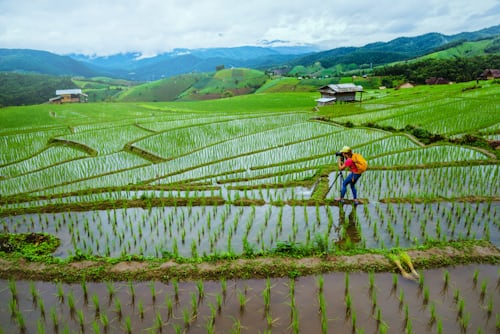
The Philippine government has launched Rice Derby 2026 in Eastern Samar, showcasing improved rice varieties and modern farming technologies as part of a broader effort to strengthen national food security and improve farm productivity.
The initiative, led by the country's Department of Agriculture, brings together farmers, researchers, seed developers, agricultural technology companies, and extension officers to evaluate the performance of high-yielding and climate-resilient rice varieties under local growing conditions. Rather than relying solely on laboratory trials, the program allows farmers to observe and compare how different rice varieties perform in real-world farming environments.
The initiative comes at a time when many agricultural economies are facing mounting pressure from climate change, rising input costs, and increasing demand for food. Across Asia, governments are investing heavily in improved seed genetics, precision agriculture, mechanization, and digital advisory services to help farmers produce more food using fewer resources.
Rice remains the staple food for more than half of the world's population, making productivity gains particularly significant. Even modest improvements in yield can translate into substantial increases in national food supplies while improving farm incomes and reducing dependence on imports.
Rice Derby 2026 also reflects a broader shift in agricultural policy—from expanding cultivated land to increasing productivity through science and innovation. Advances in crop breeding, data-driven farm management, and climate-adapted farming practices are becoming central to ensuring long-term food security across the region.
As climate variability continues to reshape agricultural production, initiatives that accelerate the adoption of resilient crop varieties are expected to play an increasingly important role in strengthening food systems throughout Southeast Asia.