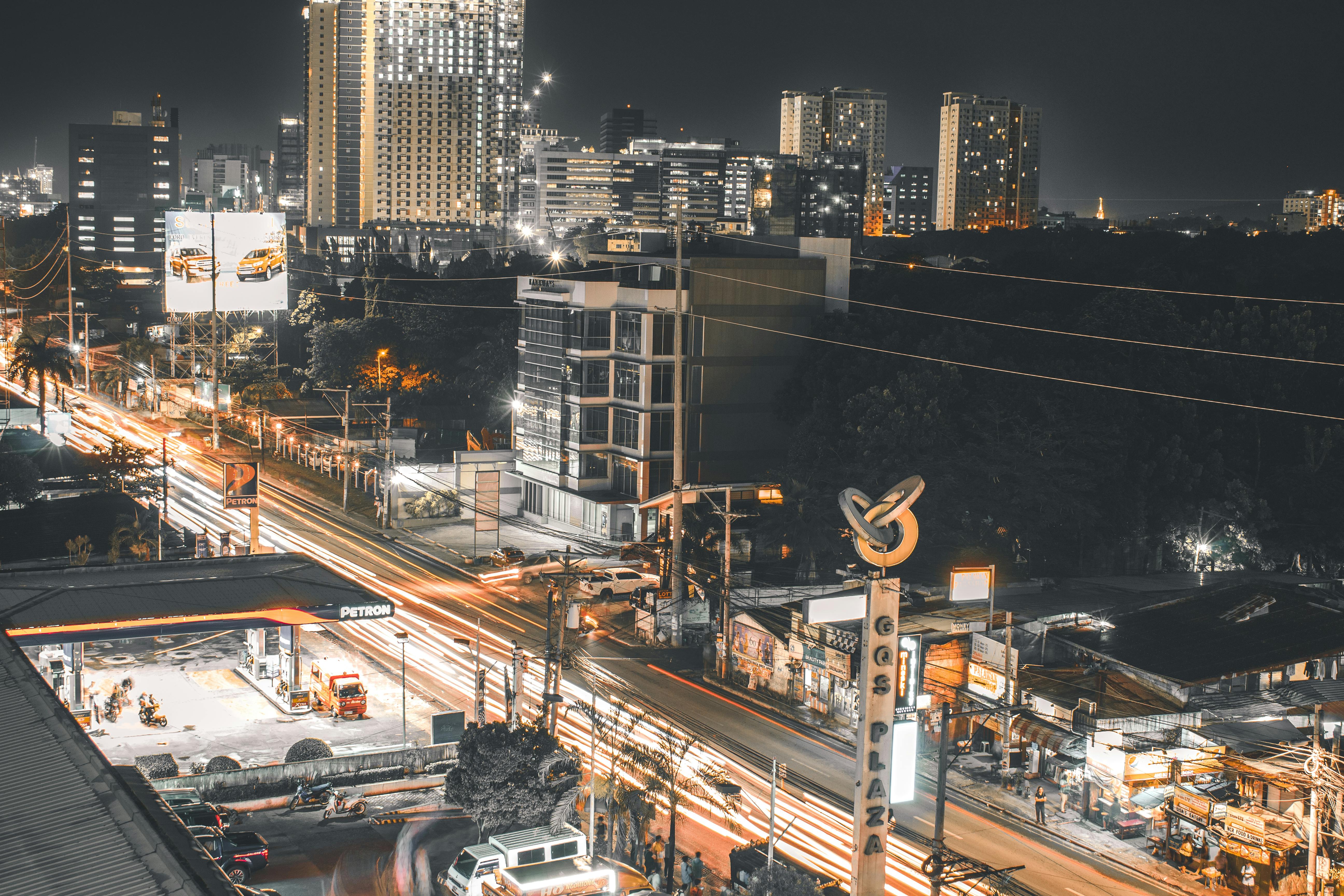
The Visayas grid has been placed under a red alert for the ninth time this year after multiple power plants went offline, triggering rotational brownouts across the region. The National Grid Corporation of the Philippines (NGCP) cited the unavailability of diesel-powered generating units alongside prolonged outages of major coal-fired plants as the primary reason for the supply shortfall.
A System Under Strain
The Visayas grid is caught in a cycle of recurring failures. As of August 2026, eight plants remain on forced outage this month alone, with others having been offline for years—some since 2021. An additional 13 plants are operating at reduced capacity, rendering approximately 836.9 megawatts (MW) of generating capacity unavailable to the grid.
The problem is compounded by limited power imports from Mindanao. The neighbouring island's capacity to export electricity has been constrained by its own coal plant outages and rising demand, cutting off a supplementary supply source that the Visayas has historically relied on.
Economic Consequences
The power instability is not merely an inconvenience—it is threatening economic growth. Central Visayas grew 3.7% in 2025, making it the largest regional economy outside Metro Manila with a gross regional domestic product of 1.32 trillion pesos. The expansion has placed increasing pressure on a grid already struggling to meet demand, raising concerns among businesses and investors.
Power accounts for roughly 40% of operating costs for local businesses, according to Mark Anthony Ynoc, immediate past president of the Mandaue Chamber of Commerce and Industry. Sustained power constraints erode the region's competitiveness, he warned, as businesses pass higher energy costs onto consumers.
A Structural Weakness
Energy analysts say the recurring alerts expose deeper, structural weaknesses in the Philippines' power system. Policy group Institute for Climate and Sustainable Cities (ICSC) has warned that heavy dependence on a small number of major power plants and critical transmission routes creates systemic risk.
"Reserves today are sized based on the largest power plant connected to the grid. But if a single shared facility, such as an LNG terminal or critical transmission corridor, can affect multiple plants at once, then that shared infrastructure should arguably become the benchmark for reserve requirements," ICSC Chief Data Scientist Jephraim Manansala said.
The group has called for a transition toward a more decentralized, diversified, and flexible power system to reduce the risk of a single disruption cascading across the grid. Expanding indigenous renewable energy sources—such as geothermal, hydropower, solar, and wind—supported by battery storage, could help reduce dependence on a handful of large facilities.
Cebu Takes Action
Cebu Governor Pamela Baricuatro has identified power stability as one of the province's biggest concerns and announced a Provincial Energy Master Plan integrating national policies, local priorities, and private-sector initiatives. The goal is to make Cebu "energy-secure, climate-resilient and future-ready".
Investment is flowing into battery energy storage. Aboitiz Power is building a 60 MW battery storage facility in Naga City, while Meralco PowerGen has energized the first phase of its Toledo storage project at 25 MW and 56.44 MWh of capacity. Transmission upgrades are also underway, with NGCP building the Cebu-Lapu-Lapu 230-kV line to support Metro Cebu and accommodate additional capacity.
The challenge, as business leaders have noted, is that infrastructure must be delivered at the same pace as demand. Without coordinated investment in generation, storage, and transmission, the Visayas grid will likely remain on the brink of crisis.