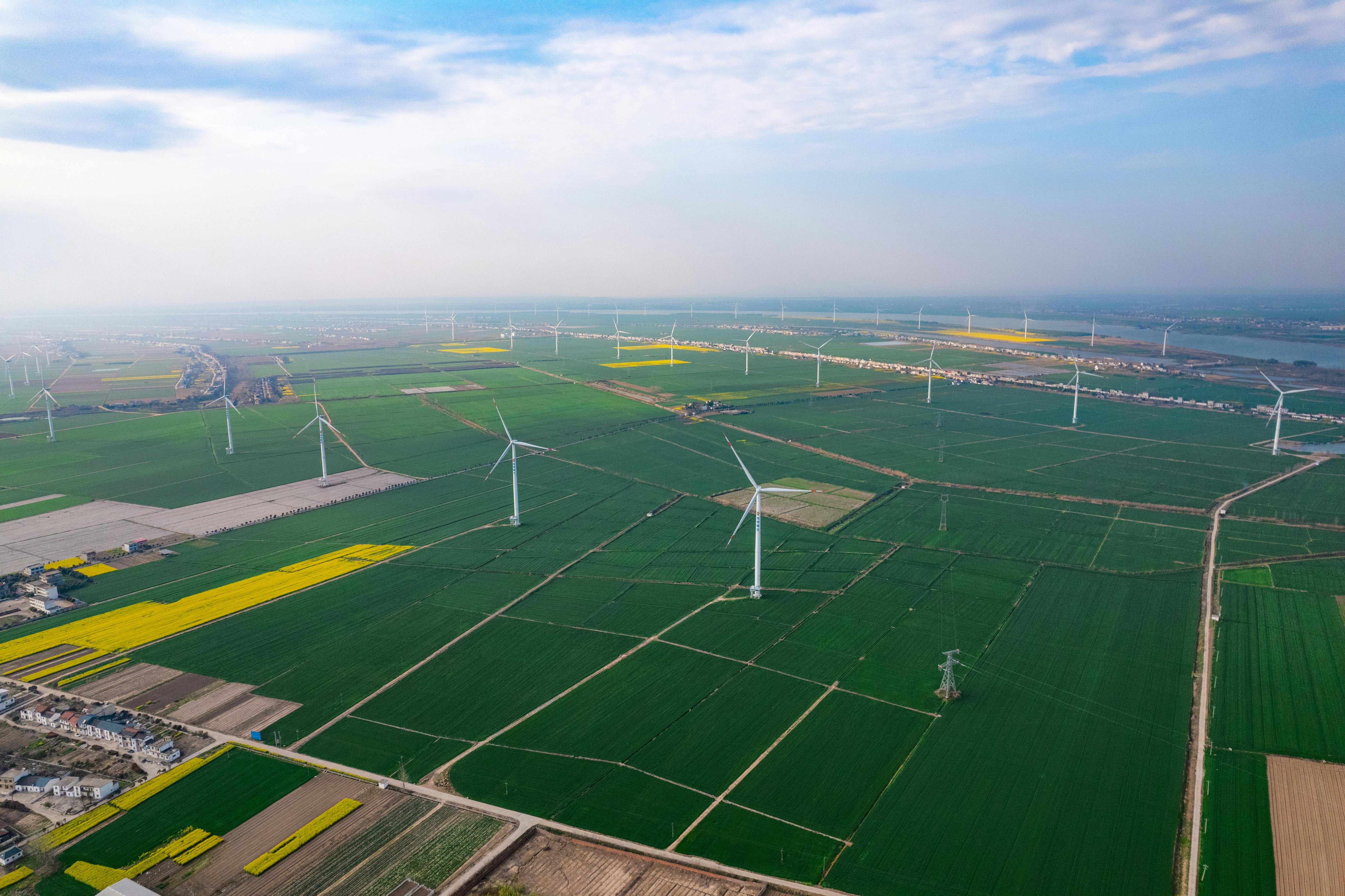
China has unveiled an ambitious renewable energy strategy that will increase wind and solar power generation by 53% over the next five years, marking one of the country's most significant clean energy commitments to date. For the first time, Beijing has made its renewable electricity target legally binding, reinforcing its long-term strategy to strengthen energy security while accelerating the transition toward a lower-carbon economy.
Under the new plan, China aims to increase renewable energy generation from 1.18 billion tonnes of coal equivalent (tce) in 2025 to 1.8 billion tce by 2030. Wind and solar power are expected to play the leading role in achieving this target, supported by major investments in battery storage, transmission infrastructure, and flexible electricity systems capable of delivering reliable power during periods of peak demand.
The announcement reinforces China's position as the world's largest renewable energy market. Over the past decade, the country has become the leading manufacturer and installer of solar panels, wind turbines, battery storage systems, and other clean energy technologies. Continued investment at this scale is expected to strengthen global renewable energy supply chains, lower technology costs, and accelerate the deployment of clean energy projects across both developed and emerging economies.
One of the most significant aspects of the new strategy is its emphasis on grid resilience rather than simply expanding generating capacity. As renewable energy accounts for an increasing share of electricity production, ensuring that power can be delivered consistently during periods of high demand has become a national priority. China plans to significantly expand battery storage, modernize transmission infrastructure, and develop more flexible electricity systems capable of balancing intermittent renewable generation with growing demand from households, businesses, and industry.
The strategy also extends beyond electricity generation. China intends to accelerate the use of renewable energy in sectors traditionally dominated by fossil fuels, including industrial heating, cooling, and the production of green hydrogen. These efforts are expected to support the decarbonization of heavy industries while creating new opportunities for clean manufacturing, advanced materials, and low-carbon industrial processes.
The announcement comes at a time when China's energy mix is undergoing a historic transformation. Although coal remains the country's largest source of electricity, renewable energy continues to expand rapidly. Earlier this year, coal's share of electricity generation fell below half of the country's total power output for the first time, reflecting the growing contribution of renewable energy to China's electricity system and the accelerating pace of its energy transition.
The implications of China's latest policy extend far beyond its borders. As the world's largest energy consumer and the leading manufacturer of renewable energy technologies, China's investment decisions influence global demand for solar panels, wind turbines, batteries, critical minerals, and electricity infrastructure. Continued large-scale deployment is expected to drive further innovation, improve manufacturing efficiency, and reduce the cost of renewable energy technologies worldwide, making clean energy increasingly accessible to other countries.
Despite this momentum, significant challenges remain. Integrating vast amounts of renewable energy into the electricity grid will require continued investment in ultra-high-voltage transmission lines, energy storage systems, smart grid technologies, and electricity market reforms. Many of China's largest renewable energy projects are located in the country's northern and western regions, requiring substantial infrastructure to transmit electricity efficiently to major industrial and population centres in the east.
China's latest renewable energy roadmap demonstrates that the global energy transition is entering a new phase. The focus is no longer solely on building more renewable generation capacity but on creating an electricity system capable of delivering clean, reliable, and affordable power at unprecedented scale. As countries around the world seek to strengthen energy security while reducing carbon emissions, China's strategy is likely to shape the future direction of global renewable energy investment, technology development, and electricity markets for years to come.